Creative Candle Making Ideas to Try with Candle Molds
Candle molds give you far more creative freedom than simply choosing a container and pouring wax into it. Shape, color, texture, layers and scent can all change the character of a finished candle.
The easiest way to plan a creative molded candle is to start with one main idea rather than trying to use every technique at once. You might choose an interesting shape, build a color effect, create a seasonal design or make a coordinated set for gifting.
This guide gives you practical candle making ideas to explore while keeping the more technical parts—such as wax choice, wicking, fragrance calculations and demolding—in their dedicated guides.
Quick ideas: choose a candle project by difficulty
| Project idea | Good for | Difficulty |
|---|---|---|
| Single-color sculptural candle | Learning a new mold | Beginner |
| Two-tone candle | Simple color contrast | Beginner–Intermediate |
| Layered ombré candle | Gradient color effects | Intermediate |
| Marbled candle | One-of-a-kind patterns | Intermediate |
| Seasonal molded candle | Gifts and themed decor | Beginner–Intermediate |
| Detailed sculptural candle | Statement pieces | Intermediate–Advanced |

If this is your first molded candle, begin with a straightforward shape and one color. Once you know how that particular wax and mold behave together, it becomes much easier to add layers, color effects or fragrance.
1. Make the mold shape the main feature
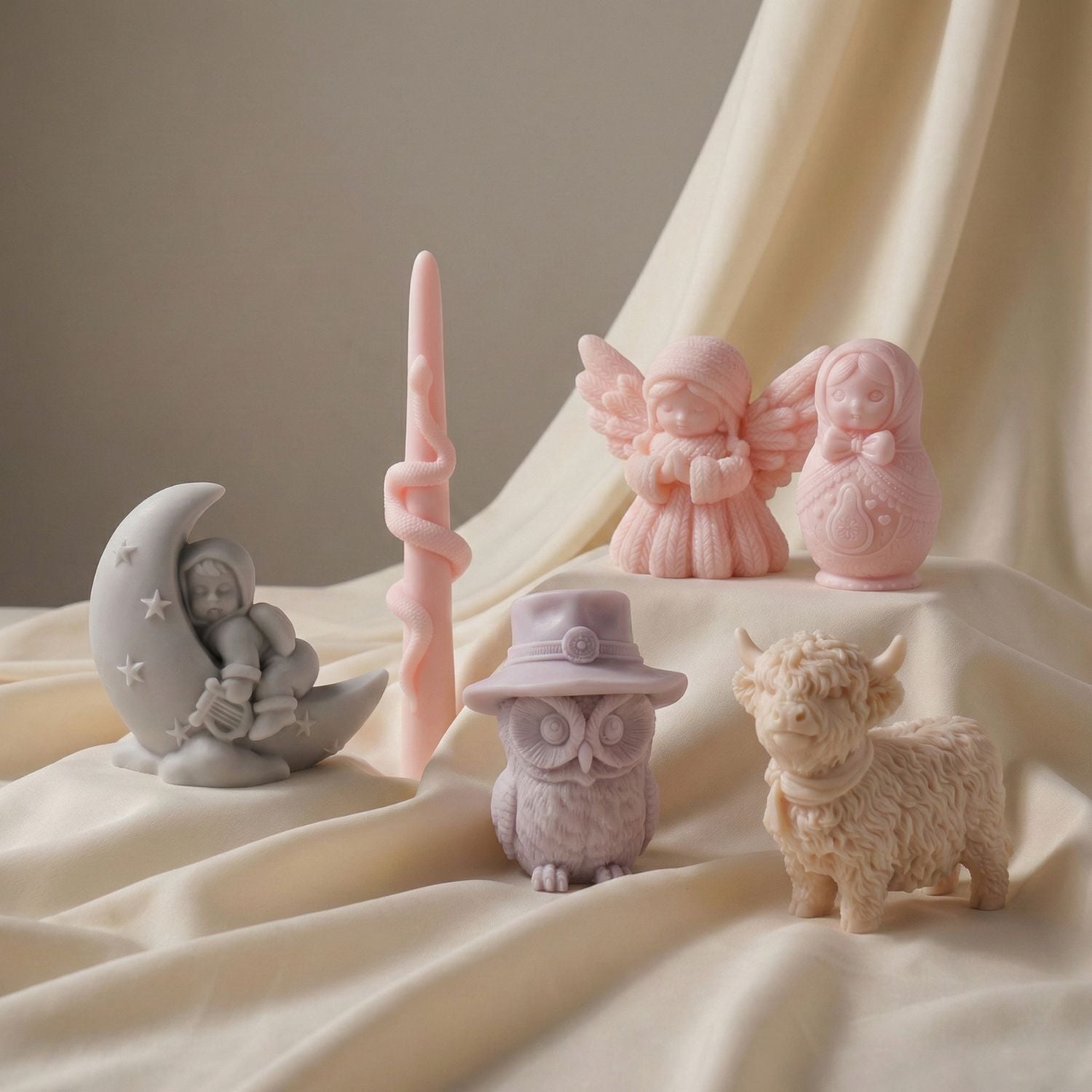
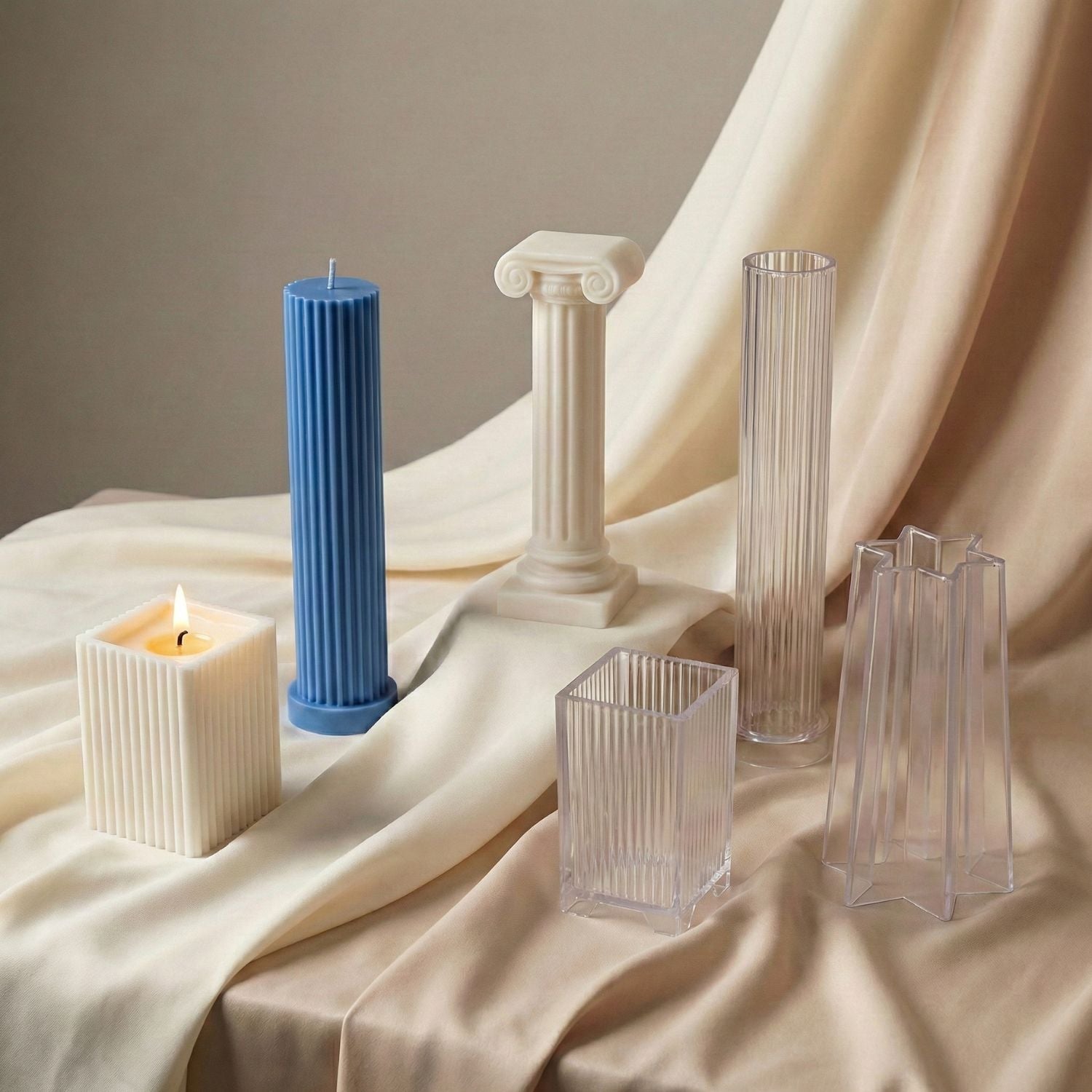
One of the simplest creative candle projects is also one of the most effective: choose an interesting mold and let the shape do the work.
Flowers, geometric forms, animals, architectural shapes and figurative designs can all create visually distinctive candles without requiring complicated decoration. A single well-chosen color can make the details of the mold stand out more clearly than an overly complicated finish.
Flexible silicone candle molds are especially useful when a design contains fine detail, curves or areas that need the mold to flex during removal. For more angular and modern designs, browse our geometric candle molds. More elaborate forms can be found in the sculptural candle molds collection.
If you are still deciding which material or construction suits your project, read our guide to candle mold materials first.
2. Create a two-tone candle
A two-tone candle is an easy way to make a familiar mold feel completely different. Instead of adding objects to the wax, use candle-compatible color to create the contrast.
You could divide the candle horizontally, use a lighter and darker version of the same color, or create a deliberate contrast between two shades. Simple molds make the color division particularly noticeable, while detailed molds can produce interesting effects when different sections catch the light.
Follow the dye manufacturer's instructions for the wax you are using. Candle dyes vary in strength and compatibility, so there is no single amount that works for every wax, dye or desired shade.
3. Try an ombré or layered color effect
Layered candles let you build a design gradually. An ombré effect uses related shades that move from dark to light, while clearly separated layers can create a bolder striped appearance.
The key is control. Each layer needs enough structure to support the next pour without unintentionally mixing everything together. The correct timing and temperature depend on the wax formulation, mold and effect you want, so follow the wax manufacturer's guidance rather than relying on one universal pouring temperature.
For your first layered project, keep the number of colors small. Two or three related shades usually make it easier to see what is happening and reproduce the result later.
4. Experiment with marbled wax color
Marbling is useful when you want every candle to look slightly different. Instead of forming clearly separated layers, compatible candle colors are allowed to create irregular veins, swirls or soft transitions through the wax.
This technique works particularly well with simple geometric or sculptural shapes because the mold provides the structure while the color pattern adds movement.

Use colorants specifically intended for candle making and record what you used. If you find a combination you love, notes make it much easier to reproduce instead of guessing on the next batch.
5. Build a seasonal candle around shape and color
You do not need to place leaves, flowers or other decorative objects inside a candle to create a seasonal look. The mold shape and color palette can communicate the theme on their own.
- Spring: floral, bird or nature-inspired shapes with soft or fresh colors.
- Summer: bright colors, coastal shapes or playful geometric designs.
- Autumn: pumpkins, leaves and textured shapes paired with warm earth tones.
- Winter: trees, snowflakes, stars, cottages and festive sculptural designs.

This approach keeps the candle itself visually interesting without introducing loose combustible decorations into the wax.
6. Make fragrance part of the design
A molded candle can also be designed around a scent theme. A floral-shaped candle might be paired with a compatible floral fragrance, while a winter design could use a scent profile that suits the season.
But fragrance is not simply a creative ingredient that can be added in any amount. Use fragrance materials intended for candle applications, check the supplier's documentation and stay within the limits appropriate for the exact wax and fragrance you are using.
If you are calculating fragrance by weight, our candle fragrance load calculator can help with the arithmetic. For creating fragrance combinations, see how to blend fragrance oils effectively.
When testing a new design, consider making an unscented version first. That lets you concentrate on the mold, wick, wax and release before introducing another variable.
7. Turn a detailed mold into a statement candle
Sculptural candles can act as decorative objects as well as candles. Human figures, flowers, animals, architectural forms and abstract designs can create a strong visual effect even with a single wax color.
Detailed projections—such as petals, fingers, antlers or thin decorative sections—can make demolding more demanding. A flexible mold may help, but the wax also needs enough structure for a freestanding candle and the finished piece must be fully set before removal.
For detailed silicone molds, see our silicone candle demolding guide. If you are choosing wax specifically for a silicone mold, read our wax selection guide.
8. Create a coordinated candle gift set
Instead of making one highly complicated candle, create several smaller candles that share a theme. This is an effective way to make a gift feel intentional without adding unsafe embellishments to the candle itself.
For example, you could use:
- the same mold in three coordinated colors;
- three different molds from one theme;
- a matching set of geometric candles;
- seasonal shapes with a consistent color palette; or
- one larger statement candle with two smaller companion candles.
Personalization can happen through the candle shape, color, packaging, label or gift card rather than attaching ribbon, beads, paper, dried plants or other combustible decoration to the candle itself.
If a candle is being given to someone else—or sold—test the finished design first rather than assuming that a change in shape, wax, wick, color or fragrance will behave exactly like a previous candle.
Creative candle ideas that are better avoided
Some candle projects look attractive in photographs but introduce unnecessary fire hazards or make performance harder to predict.
For candles that are intended to burn, avoid embedding combustible decorative material such as dried flowers, leaves, herbs, paper or similar objects in or near the area where the flame may reach them. The National Candle Association has specifically warned about flammable botanical materials embedded in candle wax near the flame.
That is why this guide focuses on creativity through mold shape, wax color, layers, texture and properly selected candle fragrance rather than loose decorative embeds.
Before you burn, gift or sell a new candle design
A beautiful candle still needs to function as a candle. Treat every meaningful change as something that needs checking.

- Make sure the wick is positioned as intended for the mold.
- Inspect the candle for cracks, major voids or damaged sections after demolding.
- Use wax, dye and fragrance according to their supplier instructions.
- Keep combustible decorative material away from the candle and flame.
- Burn-test a new wax, wick, fragrance, dye or mold combination before gifting or selling it.
- Burn candles on a stable, heat-resistant surface and keep them away from items that can catch fire.
If wick setup is the part you are unsure about, start with our guide to putting a wick in a candle mold. You can also review how to prepare a candle mold before pouring.
How to choose your next candle project
If you are overwhelmed by all the possibilities, choose one goal:
- I want something easy: make a single-color candle in a straightforward mold.
- I want more visual impact: try a two-tone, layered or marbled color effect.
- I want a statement piece: choose a detailed sculptural mold.
- I want a seasonal candle: combine a themed mold with a simple coordinated color palette.
- I want a gift: create a small coordinated set and personalize the packaging.
- I want to experiment with scent: start with a proven mold and wax combination, then test a candle-compatible fragrance.
Creative candle making does not have to mean adding more and more materials. Often the most effective design comes from choosing a strong mold shape and changing just one element—color, layers, texture or scent—at a time.
Frequently asked questions
What is the easiest creative candle project for a beginner?
A single-color molded candle is a good starting point because you can focus on the basic wax, wick, mold and demolding process before adding more design variables.
Can I put dried flowers or coffee beans inside a candle?
For a candle intended to burn, it is better to avoid combustible botanical or food material in the wax or near the flame. Use the mold shape and candle-compatible color to create the visual effect instead.
Can I use any fragrance oil in a candle?
No. Use fragrance that is intended and documented for candle applications, and follow the supplier guidance for the exact fragrance and wax combination.
What type of mold is useful for detailed sculptural candles?
Flexible silicone can make complex shapes and undercuts easier to release because the mold can peel away from the finished candle. The exact mold construction, wax and candle design still matter.
Should I test a candle if I only changed the mold?
Yes. Shape and dimensions can affect how a candle burns, so a new mold should be treated as a new finished-candle configuration and tested before it is gifted or sold.
Continue your candle making project
Once you have chosen an idea, move to the technical guide that matches the next step rather than trying to solve everything in one article:
- Browse silicone candle molds
- Browse geometric candle molds
- Browse sculptural candle molds
- Compare candle mold materials
- Learn how to wick a candle mold
- Learn how to demold a silicone candle



Leave a comment
This site is protected by hCaptcha and the hCaptcha Privacy Policy and Terms of Service apply.